






LIVING WITH OPIOID-INDUCED CONSTIPATION (OIC)

OIC is a medical term that describes constipation in people taking opioid
medication for pain relief. This occurs because opioids affect how the
digestive system moves and functions.1

SYMPTOMS YOU MAY EXPERIENCE WITH OIC:2,4

  • Straining when going to the toilet
  • Your stool (poo) is lumpy or hard
  • You feel your bowels have not emptied fully or are blocked
  • You have less than 3 bowel movements each week
  • You have stomach ache
  • You feel pain in the rectum (back passage) when pushing hard stools out

HOW COMMON IS OIC?

    OIC occurs in:

  • 9 out of 10 people prescribed opioids for cancer pain1
  • 3 in 5 people taking opioids for non-cancer pain1

HOW IS OIC DIFFERENT FROM ‘NORMAL’ CONSTIPATION?

Functional (‘normal’) constipation is common, but with OIC, the cause is specifically
linked to opioid pain medication.
1,3 Opioids bind to receptors in the gut, altering
digestion and leading to constipation.1,3

Symptoms of OIC- Banner

What is Rizmoic® and why have you been prescribed this medication?

Rizmoic® contains the active substance naldemedine.2 It is used in adults to treat constipation caused by opioid pain medicines (e.g morphine, oxycodone, fentanyl, tramadol, codeine, hydromorphone, methadone).2

Rizmoic® can be used if you are taking opioid medication and have previously been treated with a laxative.2

How does Rizmoic® work?

Rizmoic® is a type of medicine called a PAMORA (peripherally acting mu-opioid receptor antagonist) – it helps treat constipation caused by opioid pain medications by blocking opioid receptors specifically in the digestive system, without interfering with your pain relief.1

What do you need to know before taking Rizmoic®?

Talk to your doctor or pharmacist before if:2

  • You suffer from a disease which may affect your bowel wall such as a stomach ulcer; an enlarged colon due to a condition known as Ogilvie’s syndrome; diverticulitis (an illness where your gut is inflamed); cancer of the bowel or peritoneum (the lining of your gut area); a disease causing severe inflammation of the digestive tract such as Crohn’s disease.
  • You have cancer of the brain or central nervous system, multiple sclerosis, or Alzheimer’s disease.
  • You have had a heart attack within the last 3 months or if you have other severe problems with your heart which cause daily symptoms.
  • You have severe liver disease such as alcoholic liver disease, viral liver infection or impaired liver function.
  • You are taking certain medicines such as itraconazole to treat fungal infections, or an antibiotic called rifampicin to treat tuberculosis and other infections.

Talk to your doctor or pharmacist immediately if:2

  • You develop severe, lasting or worsening stomach pain as this could be a symptom of developing a hole in your bowel wall and can be life-threatening.
  • You suffer from symptoms of opioid withdrawal syndrome, which can develop within minutes to several days after taking a medicine such as Rizmoic®. Stop taking Rizmoic® and contact your doctor if you develop 3 or more of the following opioid withdrawal symptoms:
    • feeling depressed
    • nausea (feeling sick) or vomiting
    • achy muscles
    • watery eyes or runny nose
    • pupils dilating
    • hairs of the skin standing on end
    • sweating
    • diarrhoea
    • yawning
    • fever
    • inability to sleep
  • You have severe diarrhoea or stomach ache.

How do you take Rizmoic®?

Always take Rizmoic® exactly as your doctor or pharmacist has told you, and check with them if you are not sure.2

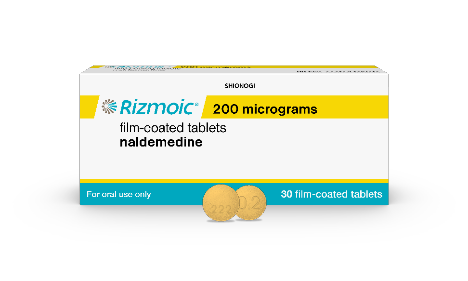
  • Rizmoic® is a round, yellow film-coated tablet (tablet image is not to scale).
  • The recommended dose is one 200 microgram tablet once daily.
  • You can take Rizmoic® with or without laxatives.
  • You can take Rizmoic® at any time of day, with food or between meals. However, once you start taking it, take it at around the same time each day.
  • There is no need to alter the dose of your opioid medicine before starting Rizmoic®.
rizmoic 200mcg pack

FREQUENTLY ASKED QUESTIONS

Can I take my laxatives alongside Rizmoic®?

Yes, you can take Rizmoic® with or without laxatives.2

What if I take too many Rizmoic® tablets?

If you have taken more Rizmoic® than you should, talk to your doctor or go to the hospital. You will be monitored for opioid withdrawal symptoms.2

Does Rizmoic® cause any side effects?

Like all medicines, this medicine can cause side effects, although not everybody gets them. If you are being treated with an opioid medicine for chronic non-cancer pain, the most common side effects are diarrhoea, stomach pain, nausea (feeling sick) and vomiting.2 If you are being treated with an opioid medicine for cancer, the most common side effects are diarrhoea and stomach pain.2

What if I forget to take my Rizmoic® tablet?

If you miss a Rizmoic® tablet, take it as soon as you remember. However, if it is less than 12 hours until your next dose, skip the missed dose and wait until it is time to take your next tablet. Do not take a double dose to make up for a forgotten tablet.2

Can Rizmoic® be taken with other medicines?

Tell your doctor or pharmacist if you are taking, have recently taken or might take any other medicines. Talk to your doctor or pharmacist if you are taking:2

  • Rifampicin, clarithromycin or telithromycin (antibiotic medicines)
  • Itraconazole or ketoconazole (medicines for fungal infections)
  • Ritonavir, indinavir or saquinavir (medicines for HIV infection)
  • Phenytoin, carbamazepine, phenobarbital (medicines for epilepsy)
  • St John’s wort, a herbal medicine used for depression

Using these medicines with Rizmoic® may affect the way the active ingredient (naldemedine) works, or increase its side effects.2

Is there anything I shouldn’t eat or drink with Rizmoic®?

You should not drink large amounts of grapefruit juice while you are taking Rizmoic®.2

Can I take Rizmoic® if I am pregnant or breast-feeding?

If you are pregnant or breast-feeding, think you may be pregnant or are planning to have a baby, ask your doctor or pharmacist for advice before taking this medicine. The effects of Rizmoic® in pregnant women are not known. Your doctor will advise you about whether you can use Rizmoic® if you are pregnant.2

Do not breast-feed during treatment with Rizmoic® as it is not known if its active ingredient (naldemedine) passes into breast milk. Talk to your doctor if you are already breast-feeding.2

What if I have stopped taking my opioid pain medicine?

You should stop taking Rizmoic® when you stop taking your opioid pain medicine.2