
OIC IS A COMMON, UNDERTREATED CONDITION AMONG PATIENTS TAKING OPIOIDS2
According to a European expert consensus statement:





According to a European expert consensus statement:
OIC affects between
of patients taking opioids for pain…2
…and around
of advanced cancer patients who
are prescribed opioids2


The percentage of patients taking laxatives for OIC and still experiencing inadequate symptoms control, in different studies range from 40-94%, due to variability in patient populations, study design, differences in laxative use and reporting bias9
Rizmoic® has proven clinical efficacy and improvements to QoL for both
cancer and non-cancer patients with OIC5,6,10

Rizmoic® significantly improved spontaneous bowel movement (SBM) vs. placebo over 12 weeks, achieving at least 3 SBMs per week, in two studies of non-cancer patients with OIC5

More patients achieved at least 3 SBMs with Rizmoic® versus placebo after 14 days, regardless of dose of opioid analgesic, in a study of cancer patients (primarily lung and breast) with a mean SBM of 1 per week6

Rizmoic® achieved a timely onset of relief from OIC, with a median time to first SBM of 4.7 hours from baseline vs. 26.6 hours for placebo (secondary endpoint, p<0.0001)11

Rizmoic® patients with non-cancer chronic pain reported significant improvements in QoL vs. placebo in a 52-week randomised controlled study (p<0.001 at all time points)10

Cancer patients on Rizmoic® reported significant improvements from baseline in QoL in a 12-week open-label extension study – including reduction in physical or psychological discomfort and worries and concerns11
Rizmoic® must not be used in patients with known or suspected GI obstruction or in patients at increased risk of recurrent obstruction, due to the potential for GI perforation.1 In patients with chronic non-cancer pain and OIC the most commonly reported side effects are diarrhoea, abdominal pain, nausea and vomiting.1 In patients with cancer and OIC, diarrhoea is very common and abdominal pain is common.1
Please consult the Rizmoic® SmPC for full safety information.

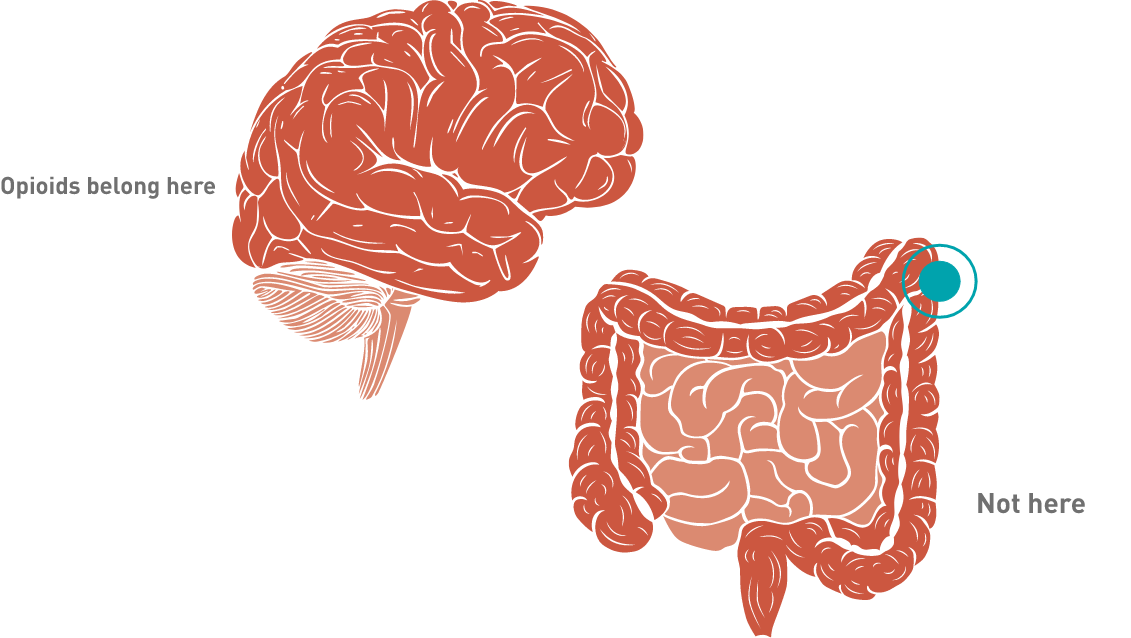
Targets the cause of OIC without counteracting the effect of opioids1

Proven clinical efficacy and improvements to QoL in OIC9

Easy administration with a once-daily tablet1

Flexibility of taking with or without food, and using with or without a laxative1

Simple initiation with no dose adjustments needed and suitable in mild, moderate or severe renal impairment1

A peripherally acting mu (μ) opioid receptor antagonist (PAMORA) that has been studied in cancer and non-cancer pain – with demonstrated efficacy in both5,6,10

Recommended by NICE and SMC as a cost effective treatment for OIC12,13
Register to ViatrisConnect to access therapy area and promotional information,
to order HCP support material and to receive updates relevant to your speciality.

Rizmoic® leaflet for HCPs
Available to order at ViatrisConnect, this leaflet contains a summary of the key information about OIC and the clinical efficacy and safety profile of Rizmoic®.
ViatrisConnect is a promotional website
intended for UK healthcare professionals.
Do you have patients who have been prescribed Rizmoic®?
They can find useful information and resources on the patient page of the website: click here
Abbreviations
BBB, blood-brain barrier; BM, bowel movement; CNS, central nervous system; GI, gastrointestinal; HCP, healthcare professional; MOP, mu opioid receptor; NICE, National Institute for Health and Care Excellence; OIC, opioid-induced constipation; PAMORA, peripherally acting mu receptor antagonist; PIL, Patient Information Leaflet; QoL, quality of life; SBM, spontaneous bowel movement; SMC, Scottish Medicines Consortium; SmPC, Summary of Product Characteristics; TA, Technology Appraisal.
References
PRESCRIBING INFORMATION: Rizmoic® 200 micrograms film-coated tablets (Each tablet contains 200 micrograms naldemedine (as tosylate))
Please refer to Summary of Product Characteristics (SmPC) before prescribing.
Indication: Rizmoic® is indicated for the treatment of opioid-induced constipation (OIC) in adult patients who have previously been treated with a laxative.
Presentation: Film-coated tablet. Round, approximately 6.5 mm diameter, yellow tablet debossed with '222' and Shionogi logo on one side and '0.2' on the other side.
Dosage and administration: Oral use. The recommended dose of naldemedine is 200 micrograms (one tablet) daily, with or without food. Rizmoic® may be used with or without laxative(s). It may be taken at any time of the day but it is recommended to be taken at the same time every day. Alteration of the analgesic dosing regimen prior to initiating Rizmoic® is not required. Rizmoic® must be discontinued if treatment with the opioid pain medicinal product is discontinued.
Contraindications: Hypersensitivity to the active substance or to any of the excipients. Patients with known or suspected gastrointestinal obstruction or perforation or patients at increased risk of recurrent obstruction, due to the potential for gastrointestinal (GI) perforation.
Warning and precautions: Rizmoic® must not be used in patients with known or suspected GI obstruction or in patients at increased risk of recurrent obstruction, due to the potential for GI perforation (see section 4.3 of the SmPC for further information). Caution with regards to the use of naldemedine should be exercised in patients with any conditions which might result in impaired integrity of the gastrointestinal tract wall (e.g. peptic ulcer disease, Ogilvie’s syndrome, malignancy of the GI tract, Crohn’s disease). Patients should be monitored for the development of severe, persistent or worsening abdominal pain. If obstruction or perforation are suspected, Rizmoic® must be discontinued. Abdominal adverse reactions (e.g. abdominal pain, vomiting and diarrhoea) have been reported with Rizmoic®. Opioid withdrawal syndrome is a cluster of three or more of the following signs or symptoms: dysphoric mood, nausea or vomiting, muscle aches, lacrimation or rhinorrhea, pupillary dilation or piloerection or sweating, diarrhoea, yawning, fever or insomnia. Patients should be advised to discontinue Rizmoic® and to contact their physician if opioid withdrawal occurs. Patients having disruptions to the blood-brain barrier (e.g., primary brain malignancies, central nervous system (CNS) metastases or other inflammatory conditions, active multiple sclerosis and advanced Alzheimer’s disease) may be at increased risk of opioid withdrawal or reduced analgesia. Patents with a recent history of myocardial infarction, stroke or transient ischaemic attack should be clinically monitored when taking Rizmoic®. Patients with severe renal impairment should be clinically monitored when initiating therapy with this medicine. Rizmoic® has not been studied in patients with severe hepatic impairment. The use of naldemedine is not recommended in these patients. Concomitant use with strong CYP3A inhibitors should be avoided. Please refer to SmPC for further information.
Interaction with other medicinal products: Naldemedine is primarily metabolised by CYP3A with some contribution from UGT1A3 and is a substrate of P-glycoprotein (P-gp). Concomitant use of strong CYP3A inhibitors such as grapefruit juice, itraconazole, ketoconazole, ritonavir, indinavir, saquinavir, telithromycin and clarithromycin should be avoided. If use with strong CYP3A inhibitors is unavoidable, monitor for adverse reactions. Rifampicin, a strong CYP3A inducer, significantly decreased exposure to naldemedine by 83% . Concomitant use of strong CYP3A inducers such as St. John’s wort (Hypericum perforatum), rifampicin, carbamazepine, phenobarbital and phenytoin is not recommended. Concomitant use of moderate CYP3A inhibitors such as fluconazole, may increase the plasma concentration of naldemedine. If used with moderate CYP3A inhibitors, monitor for adverse reactions. There is no risk of interaction with concomitant use of mild CYP3A inhibitors.
Pregnancy and lactation: There are no data from the use of naldemedine in pregnant women. Naldemedine should not be used during pregnancy unless the clinical condition of the woman requires treatment with naldemedine. Naldemedine should not be used during breast-feeding.
Effects on ability to drive and use machines: Naldemedine has no or negligible influence on the ability to drive and use machines.
Undesirable effects:
Legal Category: POM Marketing Authorisation Number: PLGB 50999/0003 MAH: Shionogi B.V. Herengracht 464, 1017 CA Amsterdam, Netherlands NHS Price: Pack size 30: £44.70 Date of Revision of Prescribing Information: February 2025, UK-RIZM-2024-00048
The SmPC for this product, including adverse reactions, precautions, contra-indications, and method of use can be found at: http://www.mhra.gov.uk/Safetyinformation/Medicinesinformation/SPCandPILs/index.htm and from Viatris Medical Information, Building 4, Trident Place, Hatfield Business Park, Mosquito Way, Hatfield, Hertfordshire, AL10 9UL, phone no. 01707 853000, Email: info.uk@viatris.com
Adverse events should be reported
Please report suspected adverse drug reactions (ADRs) to the MHRA through the Yellow Card scheme. You can report via the Yellow Card website www.mhra.gov.uk/yellowcard, the free Yellow Card app available from the Apple App Store or Google Play Store or some clinical IT systems (EMIS/SystmOne/Vision/MiDatabank) for healthcare professionals. Alternatively, you can report suspected adverse drug reactions to the Yellow Card scheme by calling 0800 731 6789 for free, Monday to Friday between 9am and 5pm. You can leave a message outside of these hours. When reporting please provide as much information as possible. By reporting adverse drug reactions you can help provide more information on the safety of this medicine. You can also report directly to the manufacturer at pv.uk@viatris.com
UK-RIZM-2024-00041 August 2025